Give the Same Ground Another Life
You cannot change the square footage on your title deed, but you can completely rewrite how light, heat, water, and living organisms interact with your space. Here are four documented transformations that did not require huge budgets or heavy machinery.
Distinguishing Concept Renders from Documented Results
Online garden makeover shows are infamous for "miracle flips": artificial turf rolled over choked weeds, sprayed-painted fences that rot within six months, and fragile flowering annuals crammed together that wither three weeks after the cameras leave.
At Pigeonsagameadow, we distinguish conceptual 3D planning layouts from real, documented outdoor results. Every case study below is evaluated over at least two seasonal cycles to guarantee thermal resilience, root health, and drainage stability.
The Concrete Heat Island to Permeable Oasis
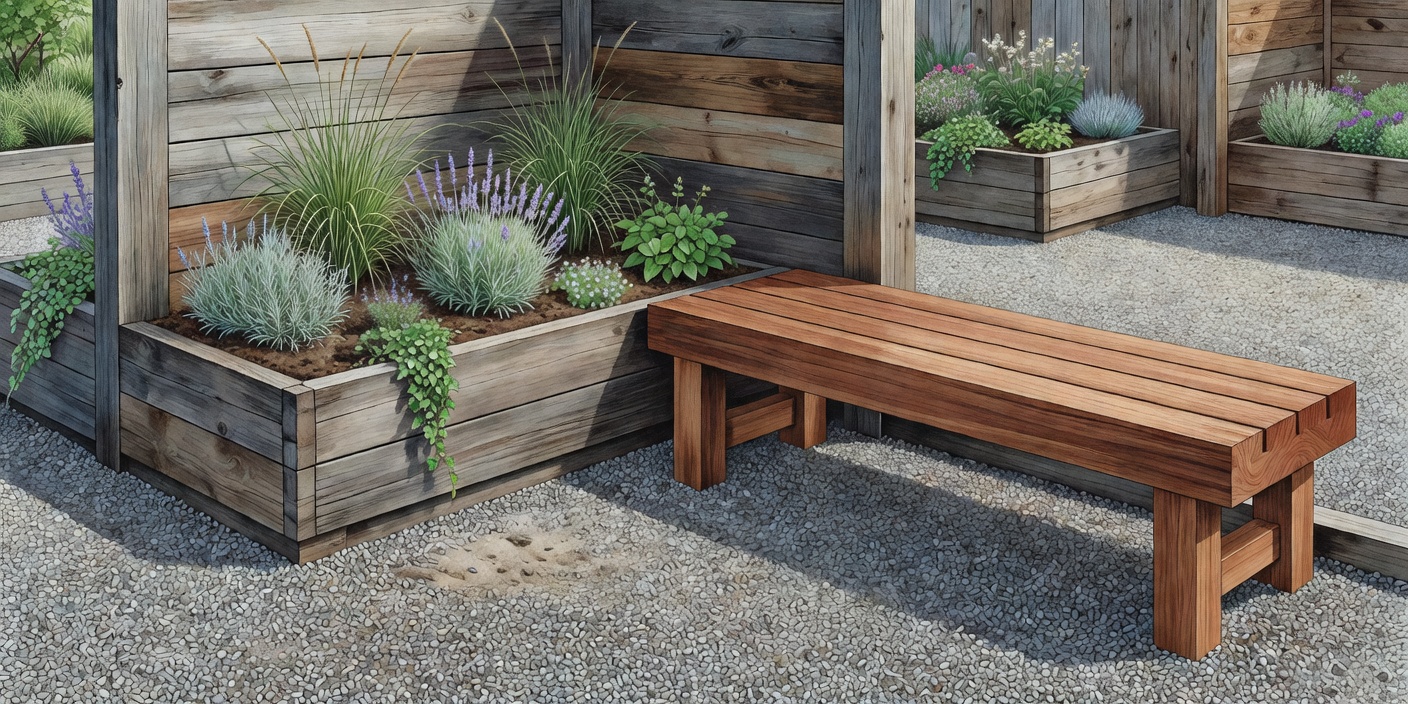
[Illustration render] Proposed blueprint for breaking up 14 square meters of impermeable concrete slab.
The Barren Sump
Single poured concrete pad with cracked bitumen seals. Rainwater gathered into a greasy pool against the kitchen back door. Midsummer ambient temperature registered 41°C. Zero bird or butterfly visits observed over a 14-day observation window.
Surface Permeability: 0% • Biodiversity Score: 1/10
The Gravel & Fern Micro-Meadow
Concrete core-drilled and replaced with a 75mm base of angular pea gravel over coarse sand. Raised galvanized water basin introduced with yellow flag iris. South wall fitted with tension cables carrying sweet peas and runner beans.
Surface Permeability: 92% • Biodiversity Score: 8/10
The Wind Tunnel Passageway to Edible Shade Spine
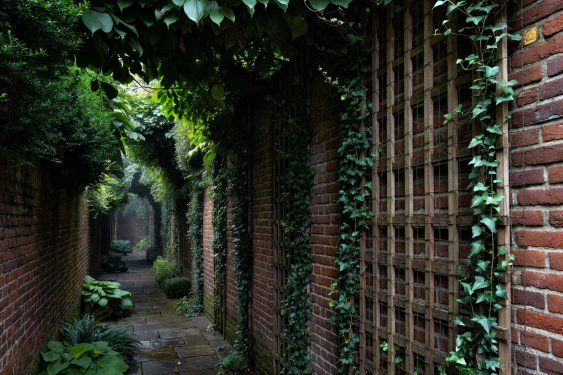
[Documented result] Shade-tolerant culinary herbs and wild ginger flourishing in 25cm wall-hung troughs.
From Storage Junkyard to Productive Corridor
Urban terraced houses usually have a drafty 1-meter wide concrete strip used only for wheelie bins and forgotten garden tools. By mounting shallow timber battens and hanging alternating pocket planters with wild garlic (Allium ursinum), alpine strawberries, and sweet woodruff, this light-starved trench became the kitchen’s most productive herb larder.
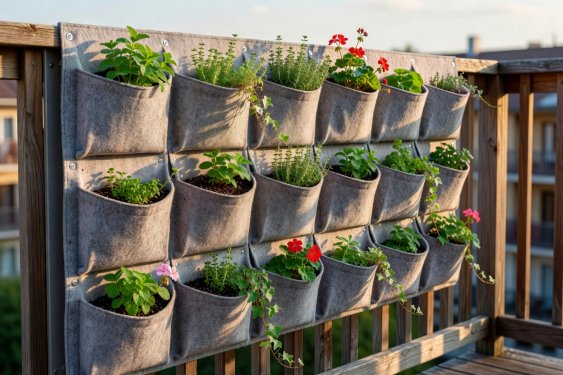
[Documented result] Zero-drilling freestanding timber A-frame planter holding 24 edible plants.
The Zero-Drilling Renter’s Framework
Tenants rarely have permission to screw brackets into landlords' exterior brickwork. This makeover utilized a self-supporting untreated larch A-frame ladder with counter-weighted base gravel boxes. It delivered 3 square meters of vertical foliage without piercing a single masonry joint.