BOTANICAL CURATION // FIELD LOG 02

The Oddities Have Their Reasons

When people see a black-petaled hellebore, a succulent that flattens itself into a horizontal coin, or a pitcher plant digesting gnats in standing rainwater, they often treat them as decorative freaks. In truth, these are nature's most pragmatic problem-solvers.

Why Plant Oddities Succeed Where Classics Fail

Traditional garden cultivars—like mass-bred hybrid tea roses or water-thirsty hydrangeas—were selected primarily for immense, symmetrical flower heads under pampered estate conditions. In small modern courtyards with erratic wind corridors, baked brick backdrops, or dense dry shade, they often succumb to mildew, aphid infestations, and scorched root balls.

Specialist botanical oddities evolved on wind-scoured clifftops, waterlogged bogs, and alpine rock fissures. They do not merely survive adverse conditions—they require them.

Specimen Profiles for Problem Microclimates

TAXON SPEC #01 Bog Carnivore
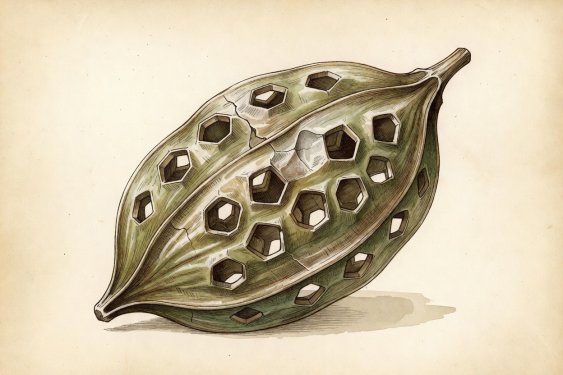
Render illustration of Sarracenia pitcher vascular ribs and trap lid

[Illustration render] Longitudinal cross-section of Sarracenia pitcher showing downward-pointing hairs.

Sarracenia Purpurea (Purple Pitcher)

Native Niche: Peat bogs with zero dissolved nitrogen.
Backyard Use: Saucers kept permanently flooded with rainwater. Traps houseflies and mosquitoes, completely avoiding chemical feeds. Survives solid sub-zero winter freezes without shedding its underground rhizome.

TAXON SPEC #02 Crassulacean Acid Succulent
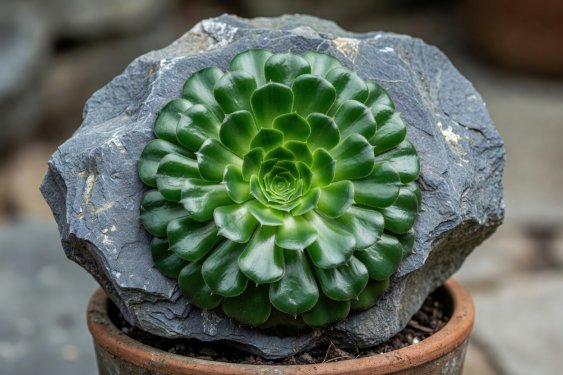
Photograph of flat green Aeonium tabuliforme rosette clinging to dry slate

[Documented result] Mature 35cm saucer rosette thriving in a 5cm vertical mortar pocket.

Aeonium Tabuliforme (Flat Rosette)

Native Niche: Vertical volcanic cliff crevices in the Canary Islands.
Backyard Use: Ideal for vertical wall crevices and shallow stone basins. Its disc-like leaf geometry sheds heavy downpours sideways, preventing crown rot while soaking up ambient fog.

TAXON SPEC #03 Twilight Specialist
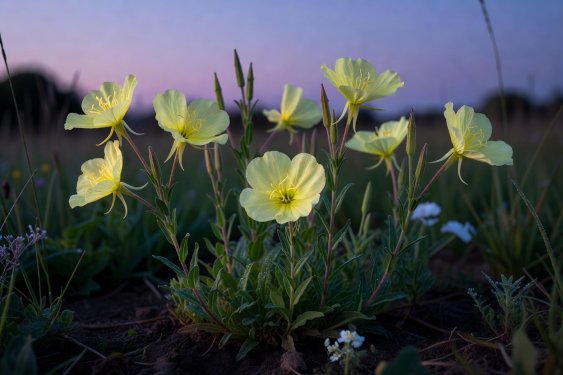
Evening primrose blooming under pale moonlight

[Documented result] Oenothera biennis flowers attracting dusk hawk moths.

Oenothera Biennis (Common Evening Primrose)

Native Niche: Disturbed gravel embankments and coastal dunes.
Backyard Use: Tolerates poor alkaline gravel. Opens brilliant yellow blooms within minutes as daylight drops, providing crucial high-energy nectar for nocturnal hawk moths and beetles.

Physiological Fact

Many unusual succulents utilize CAM (Crassulacean Acid Metabolism) photosynthesis. They keep their stomata tightly sealed during scorching daytime hours to conserve moisture, only opening pores at night to capture carbon dioxide. This makes them 500% more water-efficient than standard herbaceous garden plants.
Matching Oddities to Your Patch's Toughest Zone

Difficult Microzone Recommended Oddity Unique Biological Adaptation Substrate Formula
Dry, deep wall shade under roof overhangs Asplenium scolopendrium (Hart’s Tongue Fern) Undivided leathery fronds resistant to desiccating wind currents 50% leaf mould, 30% limestone grit, 20% loam
South-facing baked brick patio edge Sedum kamtschaticum (Stonecrop) Gel-packed succulent leaves and creeping stolons storing 95% water weight 70% coarse horticultural grit, 30% garden topsoil
Waterlogged sunken saucer tray Drosera rotundifolia (Round-leaved Sundew) Mucilage-tipped glandular tentacles digesting insect protein directly 100% nutrient-free washed silica sand and sphagnum moss
Wind-tunnel alleyway between townhouses Equisetum hyemale (Rough Horsetail) Segmented hollow silica-reinforced stems flexing without snapping Heavy moisture-retentive clay in contained root barriers